

The best Gorgias alternatives are customer support software options for e-commerce teams that want stronger live chat, real AI resolution, and pricing you can predict, and the biggest differences usually come down to ai capabilities and pricing structure rather than just channels. If you run a Shopify or DTC store, the leading Gorgias alternatives for 2026 come down to a short list: Text (LiveChat), Zendesk, Freshdesk, Fin (formerly Intercom), Re:amaze, Gladly, and Richpanel.
This guide speaks to support leaders and store owners who are sizing up Gorgias or already planning their exit. You need to weigh channel mix, support strategy, support volume, and budget before you commit to a new platform, so that is what these picks focus on.
Here are the standout choices:
- Text (LiveChat): the best Gorgias alternative overall for live chat, omnichannel messaging, and published per-seat pricing.
- Zendesk: best for enterprise teams that need deep SLA reporting and native phone support inside the Suite.
- Freshdesk: most budget-friendly entry point for small stores.
- Fin (formerly Intercom): best AI resolution layer, with pay-per-outcome pricing.
- Re:amaze: best seat-based pricing for small teams with modest AI volume.
- Gladly: best for relationship-driven DTC brands that want native voice, if you can clear the seat minimum.
- Richpanel: best AI-native helpdesk for Shopify, with one-click migration.
TL;DR: want the most reliable balance of live chat, AI automation, and a bill you can forecast? Start with Text.
Why ecommerce teams are leaving Gorgias
Gorgias earned its place as the Shopify-first helpdesk, and the reasons teams move on are consistent. Across 69 recorded buyer demos from April to May 2026, Gorgias was the incumbent prospects named most often as the tool they were leaving, cited in more than a third of calls. Two complaints came up again and again: AI that underdelivered on actual resolutions, with buyers also questioning resolution quality, and a per-ticket bill that kept climbing.
Those two themes trace back to the core pain points that push people toward alternatives to Gorgias:
- The per-ticket "success tax." Gorgias meters on tickets and AI resolutions, so your bill grows every time your store gets busier. Success literally costs you more.
- Assistive AI instead of true resolution. Plenty of teams find the AI features helpful for drafting and suggesting replies, but they don't reliably close conversations end to end, which leaves too many support tickets for agents to finish manually. Agents still do the heavy lifting.
- Voice is a metered add-on, not part of the plan. Gorgias does have a native Voice channel with phone numbers, IVR call flows, queues, voicemail, and transcripts. It sits outside your base subscription, bills on its own ticket allowance and overage rate, and every answered call counts as a billable Voice ticket. For phone-heavy teams, that is a second meter running alongside the first.
- Reporting depth. Gorgias ships native SLA policies and an SLA report, so service-level tracking is covered. What support leaders more often want is unit economics, cost-per-resolution rather than activity counts, and that is where the reporting runs thin.
- Interface learning curve. New team members take time to get productive.
- Shopify-centric limits. Brands selling across several ecommerce platforms or channels, especially businesses running multiple platforms and online stores, can feel boxed in.
None of this makes Gorgias a bad support tool. It makes it the wrong fit once your volume, channel mix, or budget has shifted, which is exactly when people start hunting for Gorgias alternatives for ecommerce.
Gorgias pricing breakdown and the "success tax" problem
To see why cost drives so many switches, and to help with any gorgias pricing compare, look at how Gorgias meters usage. Its pricing model bills on ticket volume rather than seats, with unlimited agents on paid plans:
- Starter: 50 tickets, $10/month, then $0.40 per extra ticket (3-user cap)
- Basic: 300 tickets, $60/month, then $0.40 per extra ticket
- Pro: 2,000 tickets, $360/month, then $0.36 per extra ticket
- Advanced: 5,000 tickets, $900/month, then $0.36 per extra ticket
- Enterprise: custom, $0.32 per extra ticket
Annual billing takes roughly 16% off. On top of the ticket meter, the Gorgias AI Agent bills separately at $0.90 per fully resolved conversation on annual plans and $1.00 on Starter monthly, and an AI-resolved ticket also counts against your helpdesk ticket allowance. Beyond your included AI allowance, extra interactions run $1.50 each. Voice sits on a third meter.
That stacking is where the bill moves, unlike usage based pricing models that measure actual conversations or resolutions on a different basis. A team on Advanced sits at $900/month for its 5,000 tickets. Add 500 AI resolutions at $0.90 and the invoice clears $1,300 before a single overage ticket or phone call. Your busiest stretches, Black Friday, Cyber Monday, product launches, holiday returns, are exactly when all three meters spin at once.
What makes this painful for ecommerce is the nature of the volume. "Where is my order?" (WISMO) questions are the single largest ticket category in ecommerce support. Estimates vary by source and season: DigitalGenius puts WISMO at 10-25% of contacts in normal months, while most DTC-focused analyses land in the 30-50% range, climbing past half during peak. Either way, if those repetitive contacts are not deflected efficiently, they inflate support volume and drag down customer satisfaction while a large share of the meter keeps running against simple status checks that a well-configured AI or self-service flow could absorb.
How we evaluated these Gorgias alternatives
We didn't rank these customer support tools on brand recognition or feature checklists alone. Every platform below faced the same criteria:
- Pricing model and predictability. Can you forecast the bill, or does it swing with ticket volume? We favored models that don't punish growth, and we counted every meter, not just the headline seat price.
- Live chat quality. Speed, proactive messaging, proactive customer engagement, and how well live chat handles high-intent shoppers in real time.
- Autonomous resolution. We separated tools that only suggest replies from AI that closes conversations end to end, because that difference materially affects support performance.
- Native voice and SMS. Whether phone support is built in, sold as an add-on, or bolted on through third-party apps.
- Shopify and ecommerce integration depth. Whether there is seamless integration and deep integration with e commerce platforms, including order actions like tracking, refunds, and cancellations without leaving the inbox.
- Workflow automation and SLA depth. How much routine work the platform automates, and how granular the service-level reporting gets.
- Reporting. Activity counts versus meaningful unit economics like cost-per-resolution, and whether the data helps improve customer experience.
- Migration ease. How simply you can move ticket history, macros, and tags off Gorgias.
- Real reviews. Sentiment from G2, Capterra, and Reddit, read alongside vendor claims rather than instead of them.
Each of these Gorgias alternatives earned its place by beating Gorgias on at least one dimension, usually pricing structure, AI resolution, or bundled channels.
Gorgias alternatives at a glance
| Platform | Pricing model | Starting price | Free trial/plan | Native Shopify | Phone/voice | Best for |
|---|---|---|---|---|---|---|
| Text (LiveChat) | Per-seat, unlimited tickets, AI resolutions included per plan | $19/user/mo (Essential, yearly), $25 monthly | 14-day trial, no card | Yes | SMS via Twilio, no native voice | Overall best: live chat + omnichannel |
| Zendesk | Per-seat + per-resolution AI | $55/agent/mo (Suite Team, annual) | Trial | Yes | Yes (Suite) | Enterprise and SLA reporting depth; higher-volume or tailored deployments may require you to contact sales |
| Freshdesk | Per-seat | $19/agent/mo (Growth, annual) | Free Program, 1-2 agents, 6 months | Yes | Yes (Freshcaller) | Budget and small teams |
| Fin (formerly Intercom) | Per-outcome | $0.99/outcome | Trial | Yes | Add-on | AI resolution layer |
| Richpanel | Per-AI-conversation + per-seat | $0.20/AI conversation, $200/mo min, plus $100/seat/mo | Trial | Yes (1-click import) | Via integrations | AI-native Shopify helpdesk |
| Re:amaze | Per-seat + per-AI-resolution | $29/seat/mo (Basic) | 14-day trial | Yes | Via integrations (Pro+) | Small teams with low AI volume |
| Gladly | Per-seat, custom pricing | ~$180/seat/mo, 10-seat minimum | Demo | Yes | Yes (native) | Relationship-driven DTC at scale |
| Help Scout | Per-seat | $30/seat/mo (Standard) | Trial | Yes | Limited | Simple email support |
| Kustomer | Per-seat | Custom pricing (contact sales) | Demo | Yes | Yes | High-volume CRM-centric |
| Tidio | Per-conversation | Free (50 conversations/mo), paid from ~$24-29/mo | Free plan | Yes | No | Small Shopify chat |
| LiveAgent | Per-seat | Tiered pricing: $10â$46/agent/month, billed annually | Trial | Yes | Yes (native) | All-in-one multichannel |
| Front | Per-seat | $25â$105/seat/month, billed annually | Trial | Yes | Via integrations | Collaborative inboxes |
| Zoho Desk | Per-seat | From $7/agent/mo | Free tier | Yes | Yes | Zoho ecosystem users |
Most enterprise platforms lean toward premium pricing and quoted plans instead of simple self-serve checkout.
Feature comparison versus Gorgias
Gorgias covers more ground natively than its reputation suggests. The real differences sit in how each capability is billed and how deep the reporting goes.
| Feature | Gorgias | Text | Zendesk | Freshdesk | Fin | Re:amaze | Gladly |
|---|---|---|---|---|---|---|---|
| AI chatbot | Yes | Yes | Yes | Yes (add-on) | Yes | Yes | Yes |
| Autonomous resolution | Yes, metered per resolution | Yes | Yes, metered per resolution | Add-on | Yes, metered per outcome | Yes, metered per resolution | Yes, usage-based |
| Live chat | Yes | Yes (core) | Yes | Omni line only | Yes | Yes | Yes |
| Native voice/SMS | Voice and SMS as paid add-ons | SMS via Twilio, no voice channel | Yes (Suite) | Yes (Freshcaller) | Add-on | Via integrations (Pro+) | Yes (native, billed per minute) |
| CRM / customer view | Yes | Yes | Yes | Yes | Yes | Yes | Yes |
| Workflow automation | Yes | Yes | Yes | Yes | Yes | Yes | Yes |
| Native SLA management | Yes, all plans | Enterprise plan only | Yes, Growth and above | Yes, Pro and above | Yes | Partial | Yes |
| Multilingual | Yes | Yes | Yes | Yes | Yes | Yes | Yes |
| Integrations | Broad | Broad | Broad | Broad | Broad | Broad | Focused |
Use this matrix to match must-have features to your channel mix, assess comprehensive multichannel support, and see how each option handles customer interactions, then read the full profiles for pricing and fit.
The 14 best Gorgias alternatives in 2026
1. Text (LiveChat): best overall Gorgias alternative
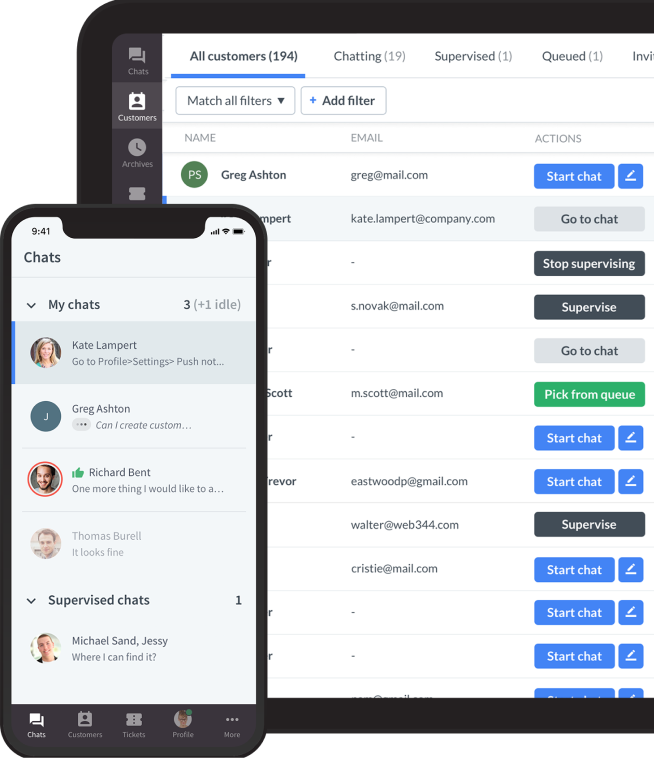
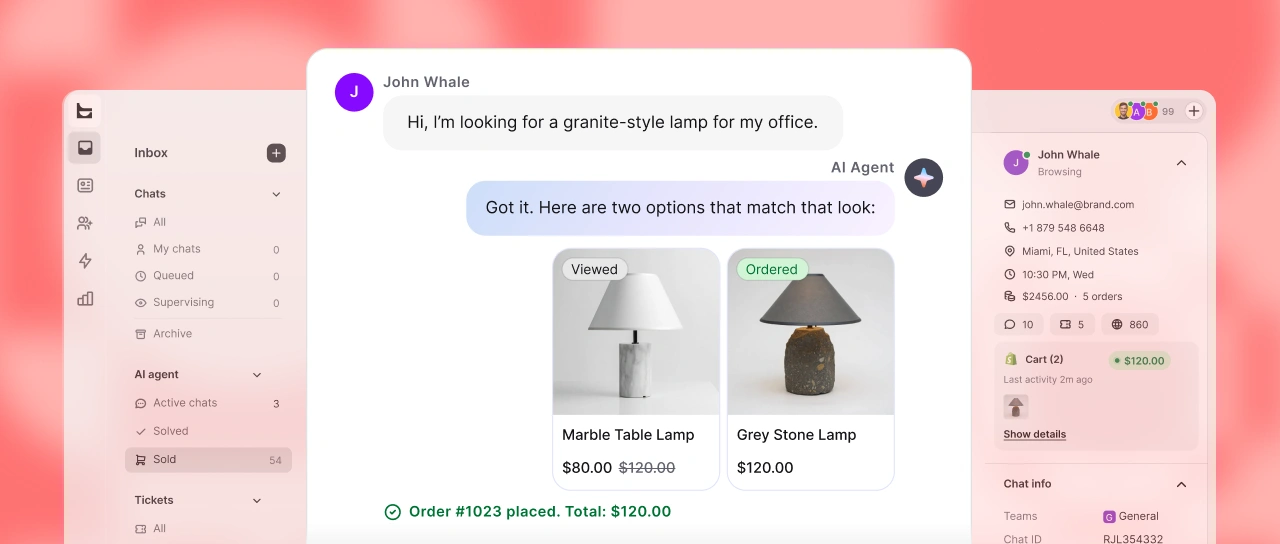
Text.com, the platform behind LiveChat, is our top pick for e commerce brands because it leads exactly where Gorgias is weakest for customer engagement: real-time live chat. It pairs proactive, high-converting chat with AI Agent automation and multichannel support for customer conversations across web, in-app, Messenger, Shopify, and SMS.
Pricing is published and per-seat. Essential is $19/user/month billed yearly ($25 monthly) and includes one AI Agent, 10 AI resolutions a month, live chat, ticketing, workflow automation, and Shopify selling. Growth is $79/user/month yearly ($99 monthly) with 10 AI Agents, 200 monthly resolutions, chat supervision, chat topics, team reporting, and unlimited chat history. Enterprise is a custom offer that adds SLAs, white label, SSO, audit logs, and a deployment team. Yearly billing saves up to 24%, and every plan starts with a 14-day trial with no card.
The structural difference from Gorgias is that tickets are unlimited and never metered. AI resolutions are the one usage line, and they're bounded: each plan includes an allowance, and if you exceed it a 50-resolution package auto-refills at $49.50, which works out to $0.99 per resolution. A resolution counts only when the AI Agent actually answers a customer question, once per conversation, and transfers to a human don't count. So your Black Friday chat volume doesn't touch the bill, and only genuine AI resolutions do.
Two things to check against your setup. There's no native voice channel, so phone-heavy teams need a separate tool. And SLA policies sit on Enterprise rather than the self-serve tiers, which matters if service-level tracking is a hard requirement at your size.
Best for: Shopify and DTC teams that want best-in-class live chat plus AI to support customers in real time, with chat volume decoupled from the invoice.
2. Zendesk: best for enterprise scale and SLA reporting depth
Zendesk is the enterprise standard. Suite Team is $55/agent/month and Suite Professional $115/agent/month on annual billing, with a Support Team tier at $19 that covers email and ticketing only, not the Suite. Suite Growth at $89 is where SLA policies, CSAT, and light agents arrive; Professional adds skills-based routing, IVR, and custom reporting through Explore.
Voice comes through Zendesk Talk inside the Suite, and the platform scales to thousands of agents. Be clear-eyed about the AI bill, though: Zendesk AI Agents are billed per automated resolution on top of seats, with a small included allowance per agent, and Copilot is a further $50/agent/month. The same volume-linked economics you're leaving Gorgias for exist here in a different shape.
Best for: large teams that need deep reporting, granular routing, and native voice inside one Suite.
3. Freshdesk: best budget option for small stores
Freshdesk runs $19/agent/month (Growth), $55 (Pro), and $89 (Enterprise) on annual billing. The free tier is now a Free Program covering one to two agents for six months rather than an open-ended plan, so treat it as a trial runway, not a permanent home.
One thing to check before you commit: live chat and messaging sit in the separately priced Freshdesk Omni line at $29, $79, and $119 per agent per month. Freshdesk also includes auto-assignment and collision prevention features for multiple team members. If chat matters to your store, price Omni, not the $19 headline. Freddy AI Copilot is $29/agent/month, requires Pro, automates ticket sorting, and provides suggestions.
Best for: cost-conscious small teams whose volume is mostly email and tickets.
4. Fin (formerly Intercom): best AI resolution layer
The Fin AI agent is an integrated component of the broader Intercom platform and uses outcome-based pricing at $0.99 per outcome, and it can run on top of your existing helpdesk with no migration. Intercom's AI personalizes interactions based on user behavior, and behavioral tracking gives agents context for more tailored support. An outcome counts when the customer confirms the answer worked, when they stop asking for help, or when Fin completes a workflow or procedure, and you're charged at most once per conversation. That last detail matters when you forecast: "assumed resolutions" are billable, so model your volume rather than assuming you only pay for confirmed wins.
Two things to factor in. The company rebranded from Intercom to Fin in May 2026, and on June 15, 2026 Salesforce signed a definitive agreement to acquire it for roughly $3.6 billion, with close expected around Q4 of Salesforce's fiscal 2027 and Fin folding into Agentforce. Pricing is unchanged today, but packaging often shifts after a deal closes, so keep multi-year commitments short.
Best for: teams that want a pay-per-outcome AI layer over an existing helpdesk, especially if responsive customer support and proactive engagement are priorities for reducing cart abandonment.
5. Richpanel: best AI-native helpdesk for Shopify
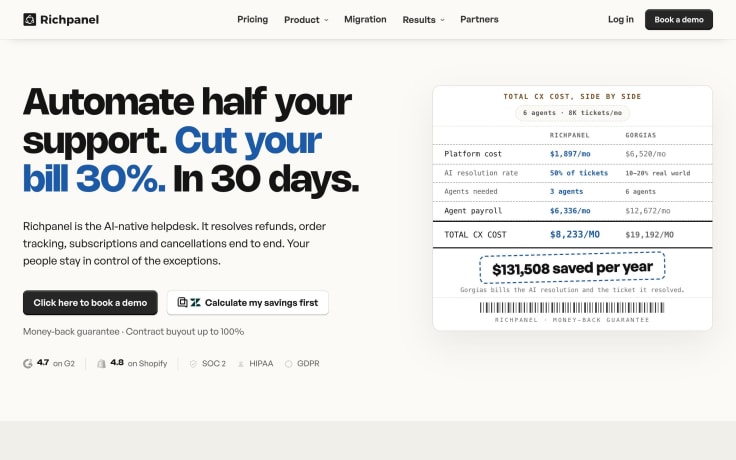
Richpanel is built for e commerce support for Shopify-first brands, with one-click Gorgias import and an AI agent designed to close conversations end to end. Richpanel guarantees a minimum of 50% AI resolution in the first 30 days or your money back, which is a commitment rather than a measured average, so read it as such, and it can be a cheaper alternative to Gorgias for teams prioritizing AI resolution over broad channel depth.
Richpanel uses a hybrid seat-and-usage pricing model: $99 per helpdesk seat per month, plus $0.20 per AI-handled conversation. Human agent replies are not subject to per-ticket fees, and AI conversations are billed once per conversation thread, with no additional charge for tickets already resolved by AI. Annual billing is available with advertised savings of up to 17%.
Best for: Shopify brands that want easy migration and high autonomous resolution.
6. Re:amaze: best seat pricing for small teams with light AI
Re:amaze runs $29, $49, and $69 per seat per month for Basic, Pro, and Plus, with a $59 flat Starter plan capped at 500 conversations. It integrates with Shopify and WooCommerce for e-commerce support across online stores, and it's genuinely cheap at the entry point.
The caveat that most comparisons skip: AI is metered here too, though Re:amaze chatbots handle routine inquiries intelligently. Each seat includes 5, 10, or 20 AI resolutions per month depending on tier, and additional resolutions bill at $0.85. Basic is also single-brand, and SMS and voice integrations start at Pro. Five seats on Basic is $145/month as a floor, not an all-in figure.
Best for: small DTC teams whose AI volume stays inside the included allowance.
7. Gladly: best for relationship-driven DTC brands at scale
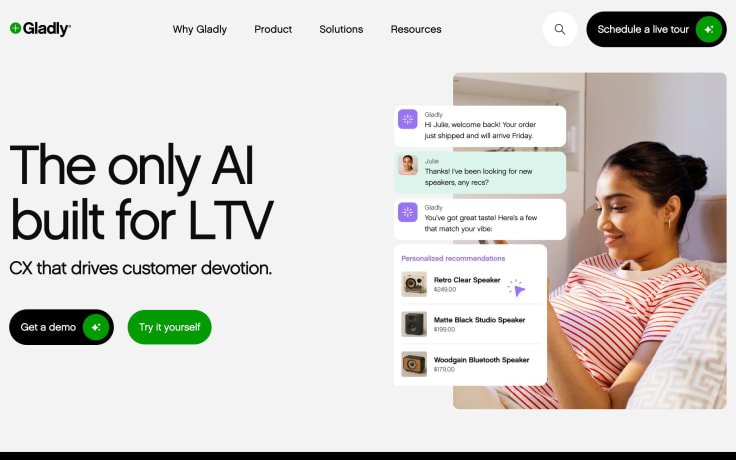
Gladly builds everything around a single, lifelong customer conversation, with an emphasis on long term customer relationships and stronger customer relationships rather than just a unified timeline, and it includes native voice. Pricing is quote-only, and third-party trackers put the Hero package around $180 per seat per month with a 10-seat annual minimum, which sets a floor near $1,800/month. Superhero runs roughly $210 with a 45-seat minimum. Voice minutes, SMS, and Sidekick AI bill separately, and businesses with multi brand support needs should verify how Gladly handles separate brands and workflows.
That seat minimum is the deciding factor. Gladly is structurally a mid-market purchase, not an option for a five-person team. There is a newer usage-based small-business plan on the Shopify App Store, priced per AI resolution and per seat under a spend cap you set, which is worth a look if you want the model without the floor.
Best for: premium, phone-heavy brands with ten or more agents.
8. Help Scout: best for simple, human-first email support
A clean, lightweight shared inbox for teams tired of a cluttered UI. Its conversational approach centers on a shared inbox, internal notes, and a knowledge base, so email support stays personal without the sprawl.
Best for: small teams that prioritize simple, personal email support.
9. Kustomer: best for high-volume CRM-centric support
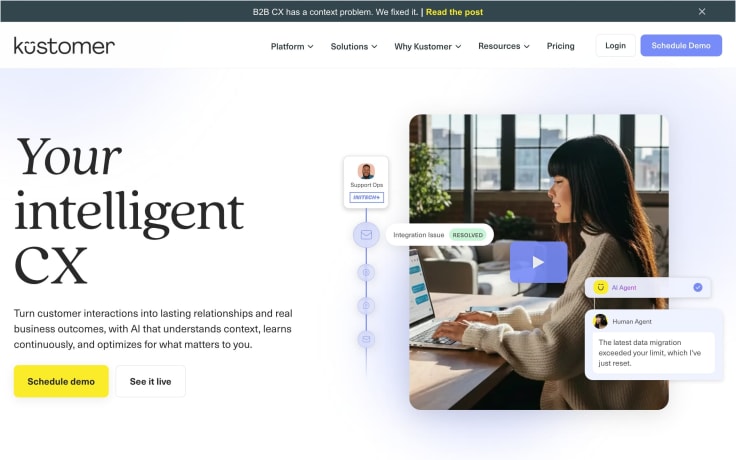
A CRM-first platform that unifies customer data into a single timeline across support channels, making Kustomer a strong fit for advanced ticketing in high-volume operations, with deeper reporting than Gorgias. Agents see the entire conversation history in one view, which speeds up resolution on complex issues. Note the seat minimum before you shortlist it. Multi-brand hierarchies require comprehensive ticketing and support solutions.
Best for: high-volume, multi-channel operations.
10. Tidio: best live chat and chatbot for small Shopify stores
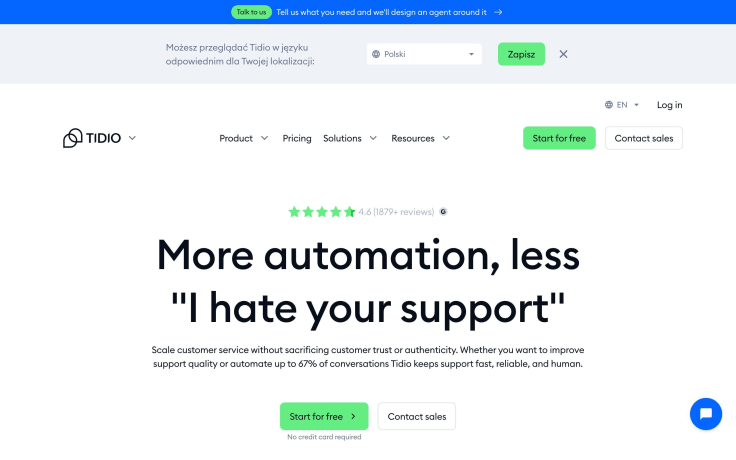
Tidio bills by billable conversations rather than seats, which is unusual in this list. The free plan covers 50 conversations a month plus a one-time pool of 50 Lyro AI conversations, and paid tiers start around $24-29/month. Lyro AI is metered separately as an add-on, so price it alongside the base plan rather than after.
Best for: entry-level stores adding chat and self-service.
11. LiveAgent: best all-in-one multichannel value
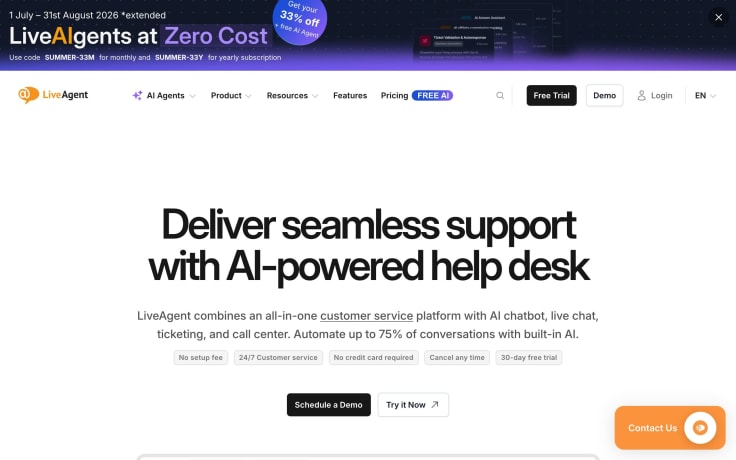
All-in-one helpdesk with a built-in call center, chat, and ticketing, with voice included in the plan rather than metered as a separate channel.
Best for: teams that want every channel in one affordable tool.
12. Front: best for collaborative team inboxes
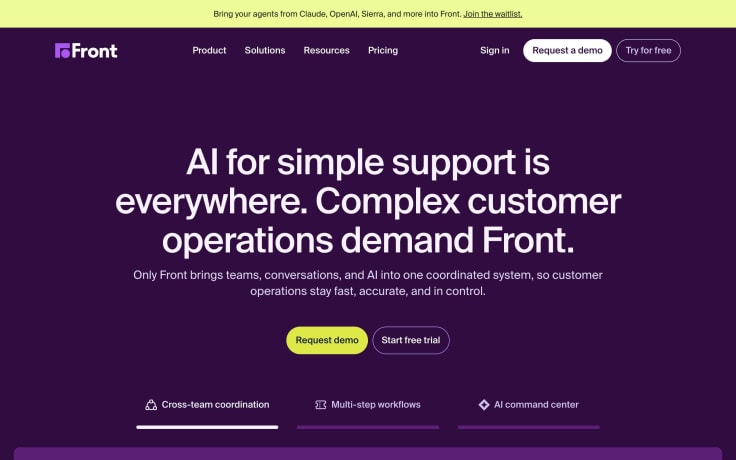
A collaborative inbox with internal notes and assignment workflows that make Front a strong fit for support teams that rely on shared inbox collaboration and internal notes. It works best when your support strategy depends on several teams coordinating in real time.
Best for: ops-heavy or B2B ecommerce teams.
13. Zoho Desk: best for Zoho ecosystem users
Budget-friendly, starting around $7 per agent per month, and deeply integrated for teams already living in Zoho CRM.
Best for: existing Zoho users.
14. Honorable mentions and post-purchase tools
Post-purchase and WISMO-focused tools like Narvar handle tracking, returns, and delivery updates. They complement a helpdesk rather than replace it. The smart move is pairing one with a platform like Text, which deflects order-status volume before it ever becomes a ticket.
Pricing models compared
How a tool bills matters as much as what it does. Four models dominate:
- Per-seat (Text.com, Zendesk, Re:amaze, Gladly): a fixed fee per agent. The most predictable base, though most vendors now stack a per-resolution AI meter on top. Text includes an AI resolution allowance per plan and refills in $49.50 packs of 50 ($0.99 each) beyond it, with tickets never metered.
- Per-ticket (Gorgias): you pay for every ticket, so busy months cost more. This is the "success tax."
- Per-conversation (Tidio): billed on unique threads rather than seats or messages.
- Per-outcome (Fin at $0.99): you pay when the AI closes a case, with assumed resolutions counting.
The honest read in 2026: almost nobody is purely one model anymore. Gorgias stacks tickets, AI resolutions, and Voice. Zendesk stacks seats, Copilot, and resolutions. Re:amaze stacks seats and resolutions. The question isn't which label a vendor uses, it's how many meters run during your peak and which ones you can cap.
There's a reporting gap worth naming too. Gorgias surfaces activity metrics and SLA achievement, but not the unit economics, cost-per-resolution, that leaders need to defend a budget. For teams that want a bill they can forecast, per-seat pricing with a bounded AI cost is the safest foundation.
How to choose the right Gorgias alternative
There's no single "best" platform, only the best fit for your team's size, channel mix, support volume, budget, and customer experience goals.
Start with your channel mix. If live chat drives revenue and you need to support customers across web, social, and email, prioritize a chat-first omnichannel platform like Text. If phone sits at the center of your support, compare how each vendor bills it: Gladly and LiveAgent include voice in the seat, Zendesk bundles Talk into the Suite, and Gorgias meters Voice as a separate add-on with its own ticket allowance. The question is not whether phone exists, it's what it costs at your call volume.
Then weigh team size and volume.
- Small Shopify stores: Tidio or Freshdesk give you chat and ticketing without a heavy price tag. Check Tidio's conversation caps and Freshdesk's Omni pricing before you commit.
- Enterprise and high ticket volumes: Zendesk or Kustomer handle scale and reporting depth.
- Relationship-driven DTC brands: Gladly's lifelong-conversation model and native voice suit premium brands, provided you clear the ten-seat minimum.
- AI-native teams: Richpanel and Fin both lead with autonomous resolution, priced per conversation and per outcome respectively.
- Overall best fit: Text, for teams that want strong live chat, AI automation, and predictable per-seat pricing in one place.
Match the pricing model to your volume profile. If ticket counts swing hard during peaks, per-seat pricing shields the base. If most of your volume is repetitive WISMO-style questions, a per-outcome AI layer can work out cheaper, as long as you model assumed resolutions into the forecast.
Finally, decide whether you need a platform that replaces your helpdesk or one that layers on top, and whether you need better ai tools on top of your current stack or a full platform replacement. Text, Zendesk, Freshdesk, Re:amaze, Gladly, and Richpanel are full replacements. Fin can run over an existing helpdesk with no migration, and post-purchase tools like Narvar complement rather than replace your support platform.
How to migrate from Gorgias without losing data
The biggest fear when leaving Gorgias isn't the new tool. It's losing years of ticket history, macros, and tags. With a structured plan, you can move without dropping data or disrupting customers.
1. Export your data from Gorgias. Pull your full ticket history, canned responses (macros), tags, and customer records. Document how your current tags and macros map to real workflows.
2. Map your workflows before you import. Rebuild your rules, automations, and assignment logic in the new platform first. This is the moment to retire stale macros and consolidate overlapping tags rather than importing clutter.
3. Use a one-click import where it exists. Richpanel offers a one-click Gorgias import. For tools without a native importer, a CSV migration or a migration service can move tickets, contacts, and tags.
4. Run both systems in parallel. Keep Gorgias live for a short overlap while your team works in the new tool. Route new conversations to the new platform and let existing threads close out in Gorgias.
5. Train your AI on your knowledge base. Before go-live, connect your help center, FAQs, and past resolutions so the AI answers accurately from day one. This is what turns assistive suggestions into end-to-end resolutions.
6. Verify, then decommission. Once you've confirmed ticket history, tags, and macros transferred correctly, close the Gorgias account. If you used the Voice add-on, port your phone numbers out before you cancel.
Done in this order, migration protects data continuity and gives agents a clean workspace instead of a copy of the old clutter. Most teams finish inside a normal billing cycle.
Final recommendation
Every tool in this guide beats Gorgias on at least one dimension, but for the widest range of ecommerce teams, Text.com (LiveChat) is the best Gorgias alternative in 2026. It leads on real-time live chat that converts, and pairs that with AI Agent automation and omnichannel messaging. At $19/user/month billed yearly, tickets are unlimited and only AI resolutions meter, so a Black Friday surge grows your revenue instead of your invoice.
If your needs are more specialized, the runner-ups map cleanly: Zendesk for enterprise scale and reporting depth; Freshdesk for small, budget-conscious stores; Fin for a pay-per-outcome AI layer over your existing helpdesk; Re:amaze for small teams with light AI volume; Gladly for relationship-driven, phone-heavy brands with ten or more agents; and Richpanel for AI-native Shopify support with one-click migration.
For most ecommerce teams, though, the balance of live chat leadership, AI resolution, and forecastable cost points to one place. Start a Text.com trial and see how chat-first support feels after Gorgias.
Frequently asked questions
What are the best Gorgias alternatives in 2026?
Text.com (LiveChat), Zendesk, Freshdesk, Fin (formerly Intercom), Re:amaze, Gladly, and Richpanel. Text.com leads overall for teams that want best-in-class live chat, AI automation, and predictable per-seat pricing in one platform.
Does Gorgias have AI?
Yes. Gorgias offers an AI Agent plus assistive features that draft replies, suggest answers, and deflect routine questions. It bills at $0.90 per fully resolved conversation on annual plans and $1.00 on Starter monthly, and an AI-resolved ticket also counts against your helpdesk allowance. Many teams find it assists agents more than it closes cases outright, which is why they look at Richpanel or Fin.
How much is Gorgias?
Ticket-based pricing across five tiers: Starter $10/month for 50 tickets, Basic $60 for 300, Pro $360 for 2,000, Advanced $900 for 5,000, and custom Enterprise, with overages of $0.32 to $0.40 per ticket. Annual billing takes off about 16%. AI resolutions and the Voice add-on bill on separate meters, so the effective cost sits well above the list price for most teams.
Does Gorgias have native phone or voice support?
Yes. The Gorgias Voice add-on is available on all Helpdesk plans and lets you create or port phone numbers, build IVR call flows and queues, take voicemail, and get call recordings and transcripts, all landing as tickets in the same inbox. It is a paid add-on with its own ticket allowance and overage rate rather than something bundled into the base plan, and every answered call is billable. SMS is also available as an add-on.
Does Gorgias have SLA management?
Yes, natively and on all Helpdesk plans. You can set first response time and resolution time goals per channel, use channel templates, pause the clock outside business hours, and track achievement and breaches in the SLA report. Voice ticket SLAs are tracked separately from other channels. If you're comparing on service levels, the differentiator is reporting depth and unit economics, not whether the feature exists.
Is Gorgias's per-ticket pricing more expensive than the alternatives?
It depends on your AI and channel mix. A team on Advanced pays $900/month for 5,000 tickets before AI resolutions, overages, or Voice. Five seats on Re:amaze Basic is $145/month as a floor, but AI resolutions past the included allowance bill at $0.85 each and SMS and voice require Pro. Compare total meters, not headline tiers.
Who is Zendesk's biggest competitor?
Freshdesk and Fin, with Freshdesk competing hardest on price and Fin on conversational support and AI. For ecommerce teams, and especially for e-commerce Gorgias buyers, the real comparison is between support platforms with different AI capabilities and pricing models, with Gorgias and Text often competing for the same shortlist.
What is the best Gorgias alternative for live chat?
Text. It's built around real-time, proactive chat that converts high-intent shoppers and helps improve customer experience, paired with AI and omnichannel messaging.
What is the best Gorgias alternative for small Shopify stores?
Tidio or Freshdesk. Tidio's free plan covers 50 conversations a month, and Freshdesk's Free Program covers one to two agents for six months. Both are starting points rather than permanent homes.
Can I migrate from Gorgias without losing my ticket history, macros, and tags?
Yes. Export your data, map workflows before importing, use a one-click importer where available, run both systems in parallel briefly, then decommission Gorgias once everything is verified. Port any Voice numbers before you cancel.
Is Gorgias only suitable for Shopify stores?
Gorgias is Shopify-first and shines there, and it was built for e commerce gorgias use cases, but it also integrates with BigCommerce, Magento, and WooCommerce. Brands operating across multiple platforms can still find it limiting, which is why broader alternatives come up.
Which Gorgias alternative is best for automation and AI resolution?
Richpanel guarantees a minimum 50% AI resolution in the first 30 days, and Fin bills $0.99 per outcome and can layer on top of an existing helpdesk.
Which Gorgias alternative offers the most predictable pricing?
Seat-based platforms like Text give you the most stable base. Just check how each one meters AI on top, since most now do.