

Convert pre-purchase questions into confidence
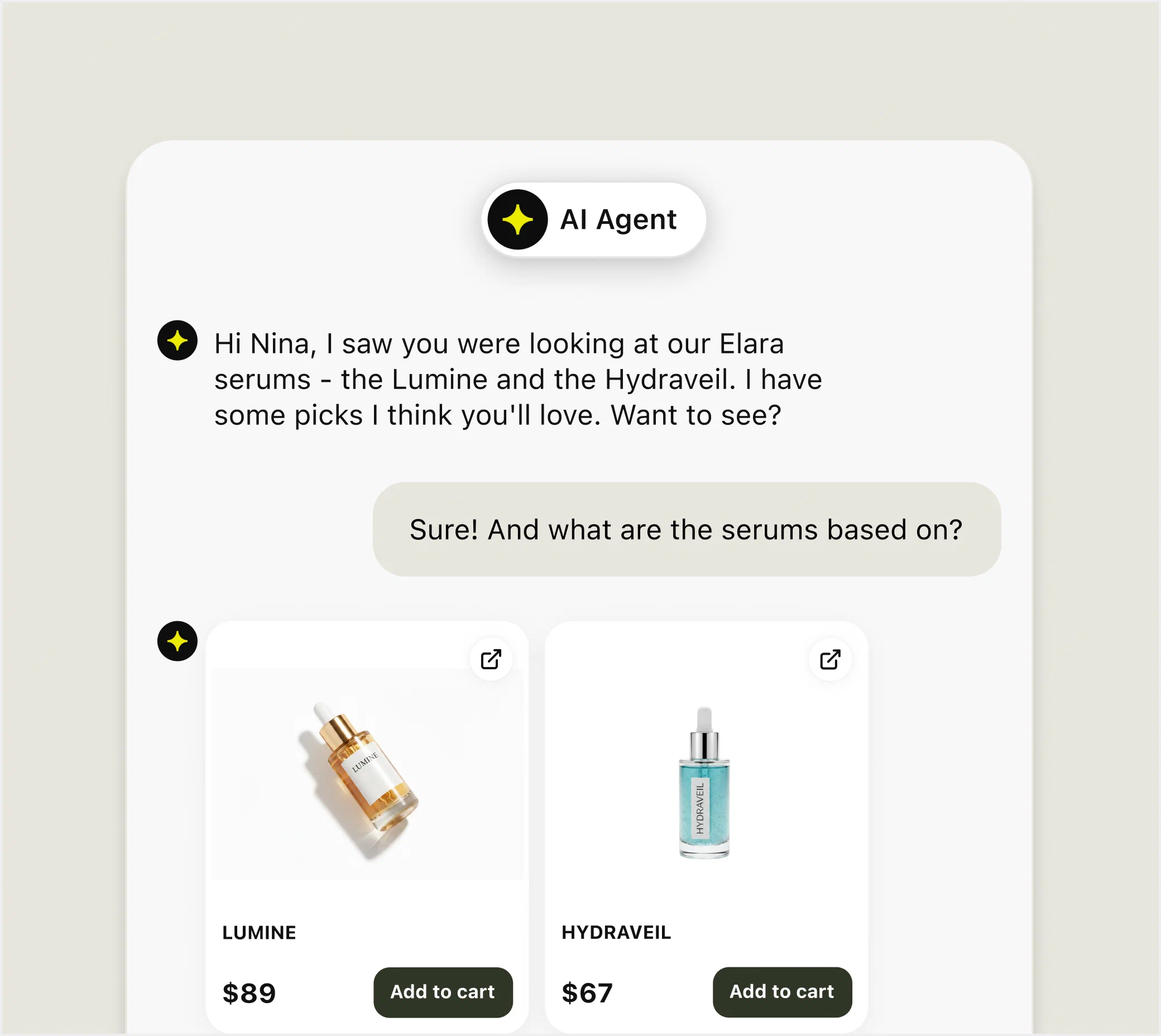
Answer product questions while purchase intent is active. Use customer context to make every recommendation more relevant.
Answer product and order questions, reduce checkout friction, and resolve post-purchase issues with live chat, AI, and connected customer data.
Free 14-day trial No credit card required
30,000+ teams already turning conversations into revenue
For ecommerce businesses, exceptional customer service removes friction without losing the human touch. Shoppers get clear information about products, availability, delivery, payment, and returns before uncertainty turns into an abandoned cart.
After checkout, consistent support helps support teams resolve customer complaints and protect the relationship when an order changes.
Answer product questions while purchase intent is active. Use customer context to make every recommendation more relevant.
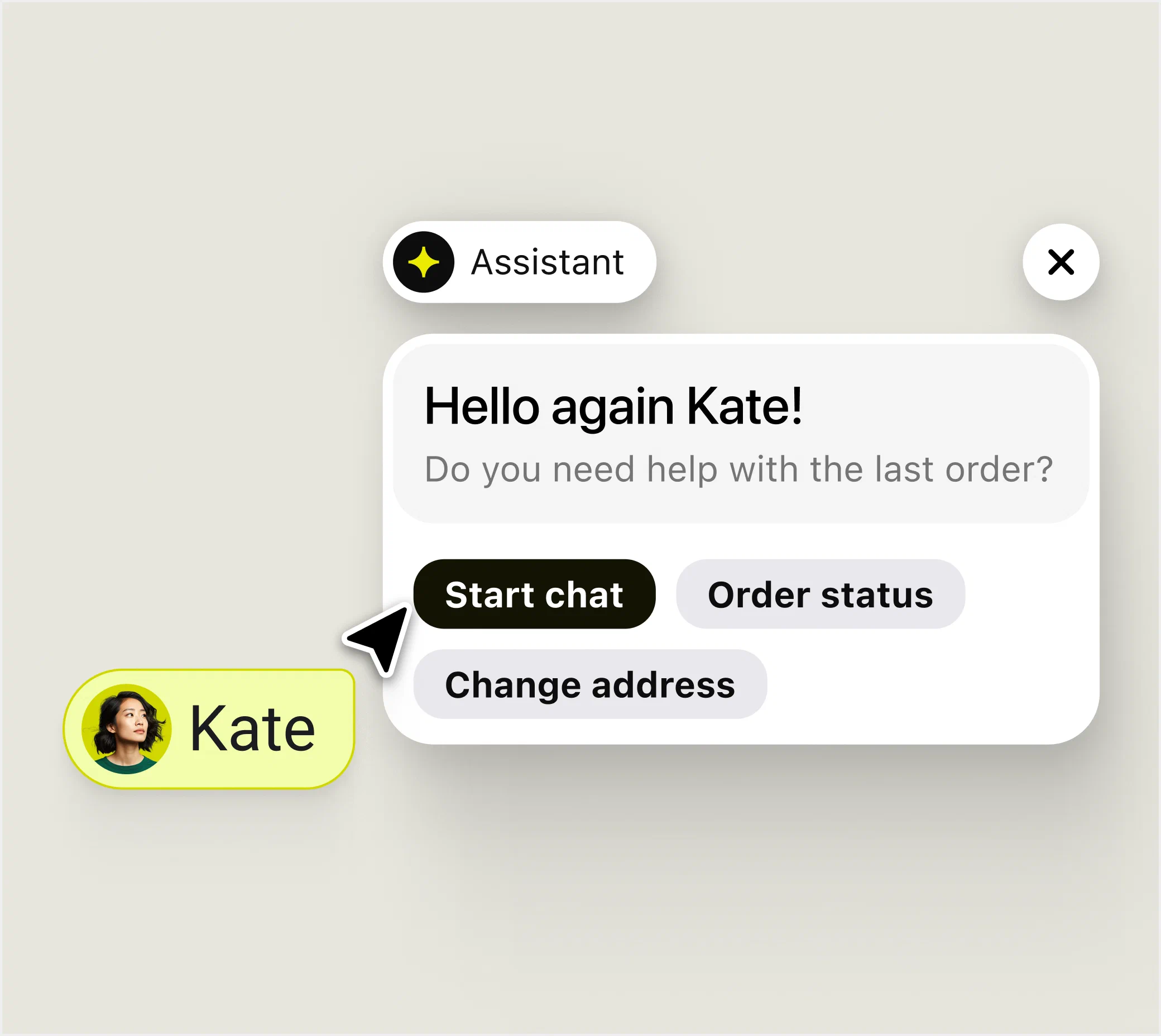
Make returns, exchanges, and delivery help easy to reach. Bring in a person when an exception or urgent change needs attention.
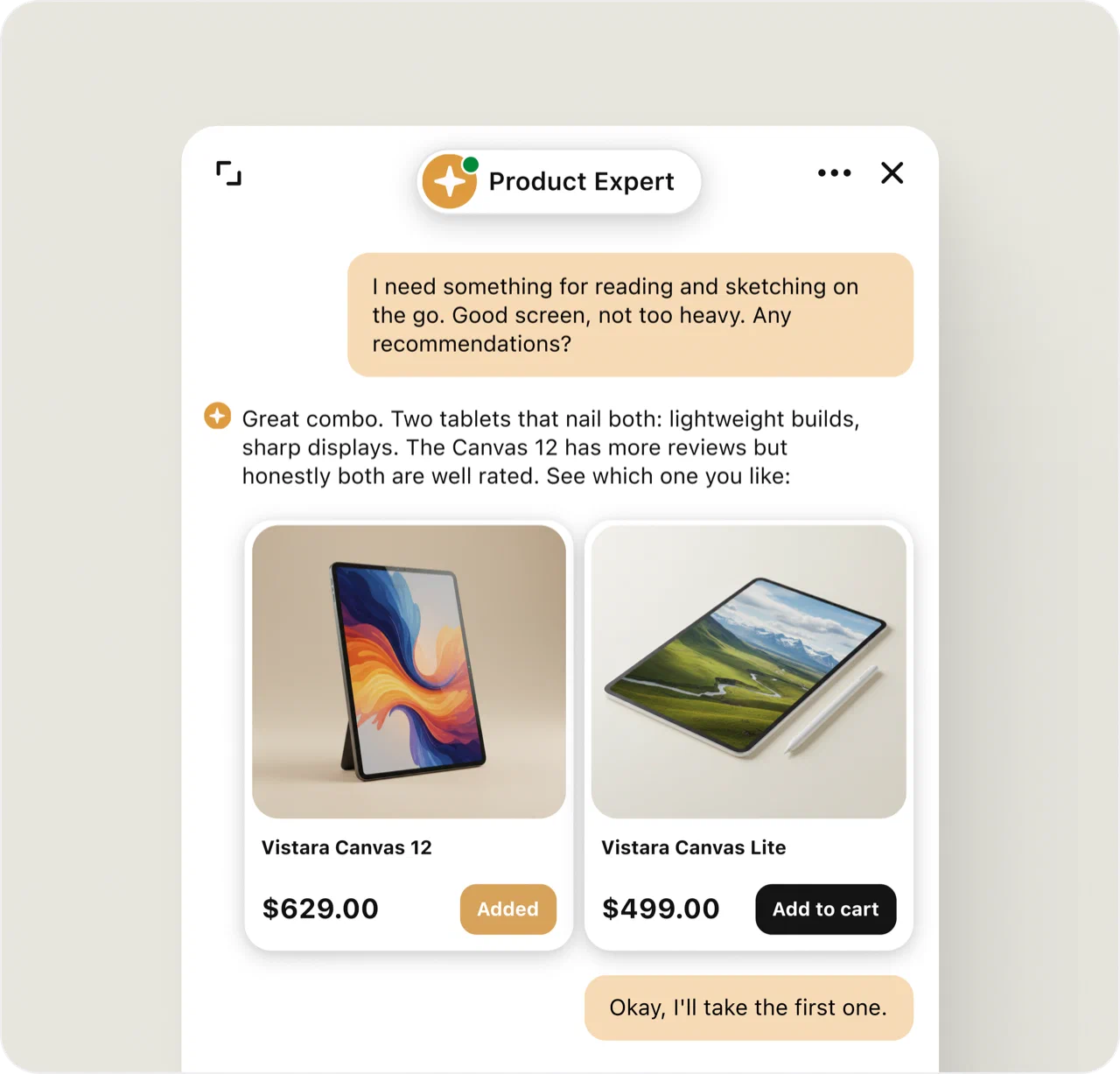
Explain sizing, compatibility, shipping, and product differences while purchase intent is active.
Keep returns, exchanges, delivery updates, and product guidance easy to reach.
Help sales teams recommend relevant options without relying on a generic sales script.
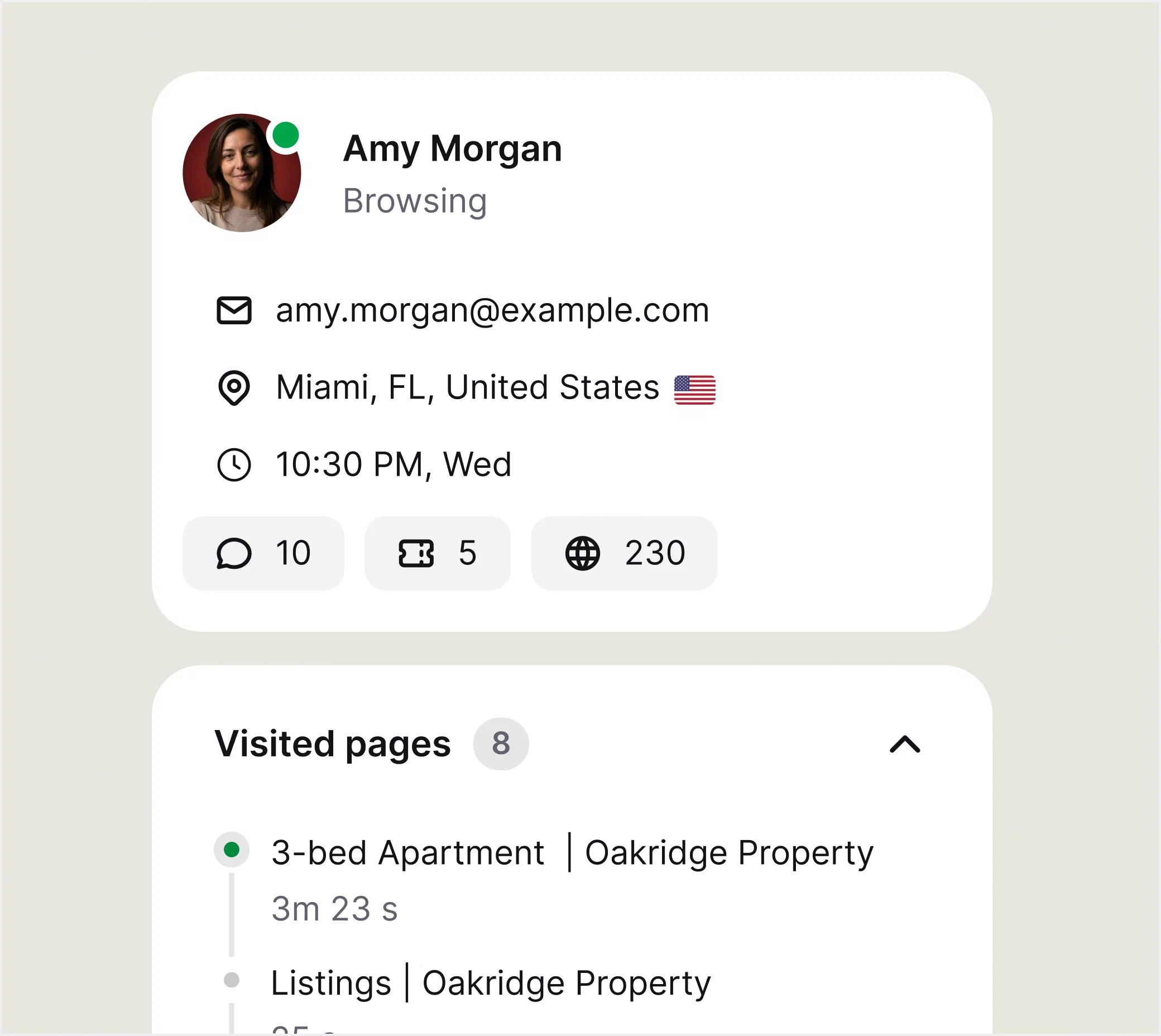
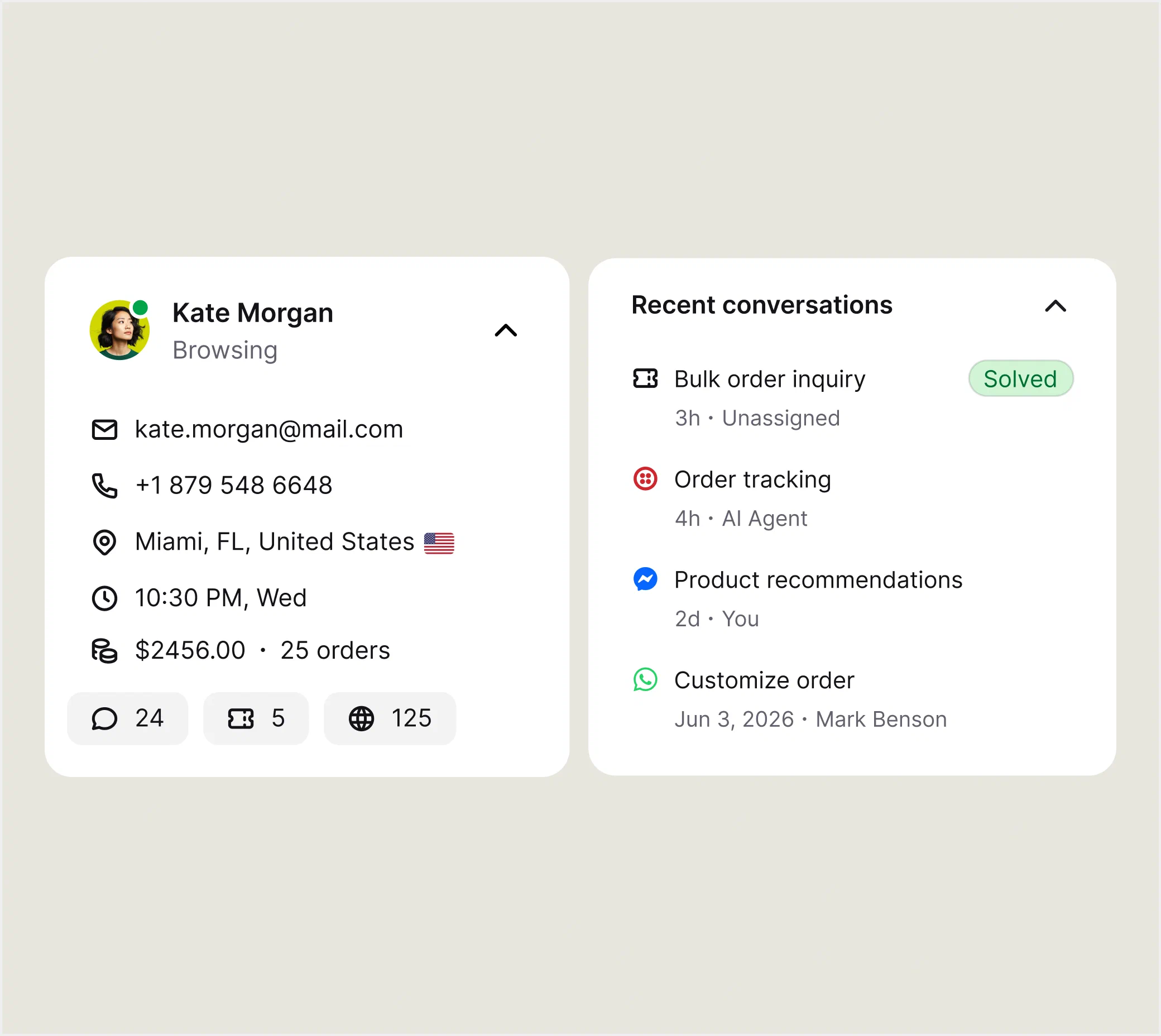
Bring customer data and customer history into one view so shoppers keep their progress across every channel. Agents start with relevant details instead of asking customers to repeat themselves.
A unified agent workspace keeps customer conversations, ownership, and essential actions together, giving support agents the context to respond accurately. Transfers stay clear because previous messages and actions move with the request.
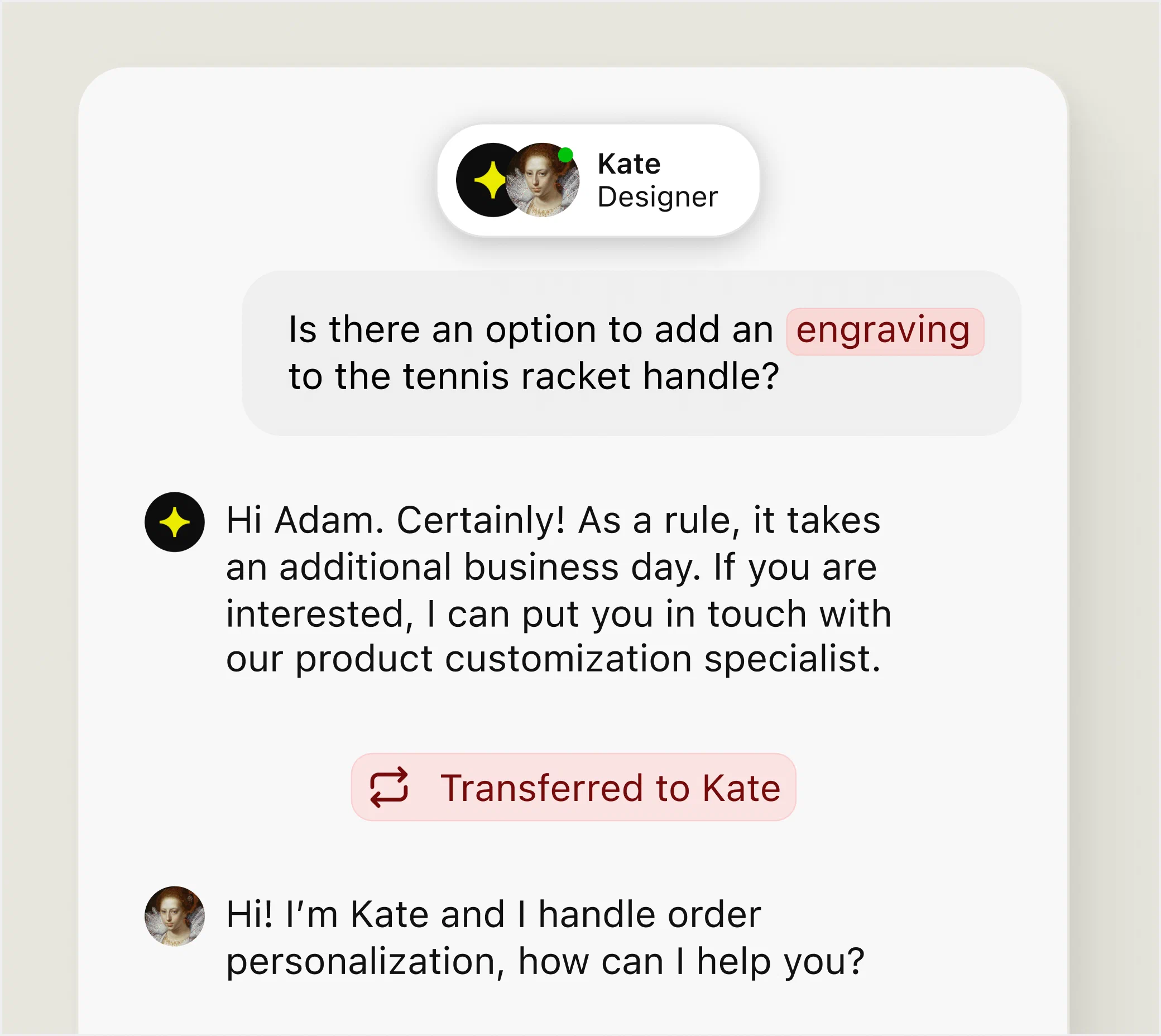
Text's AI Agent answers routine customer queries and brings in a person when judgment, empathy, or an exception matters. Shoppers get immediate assistance without losing access to human expertise.
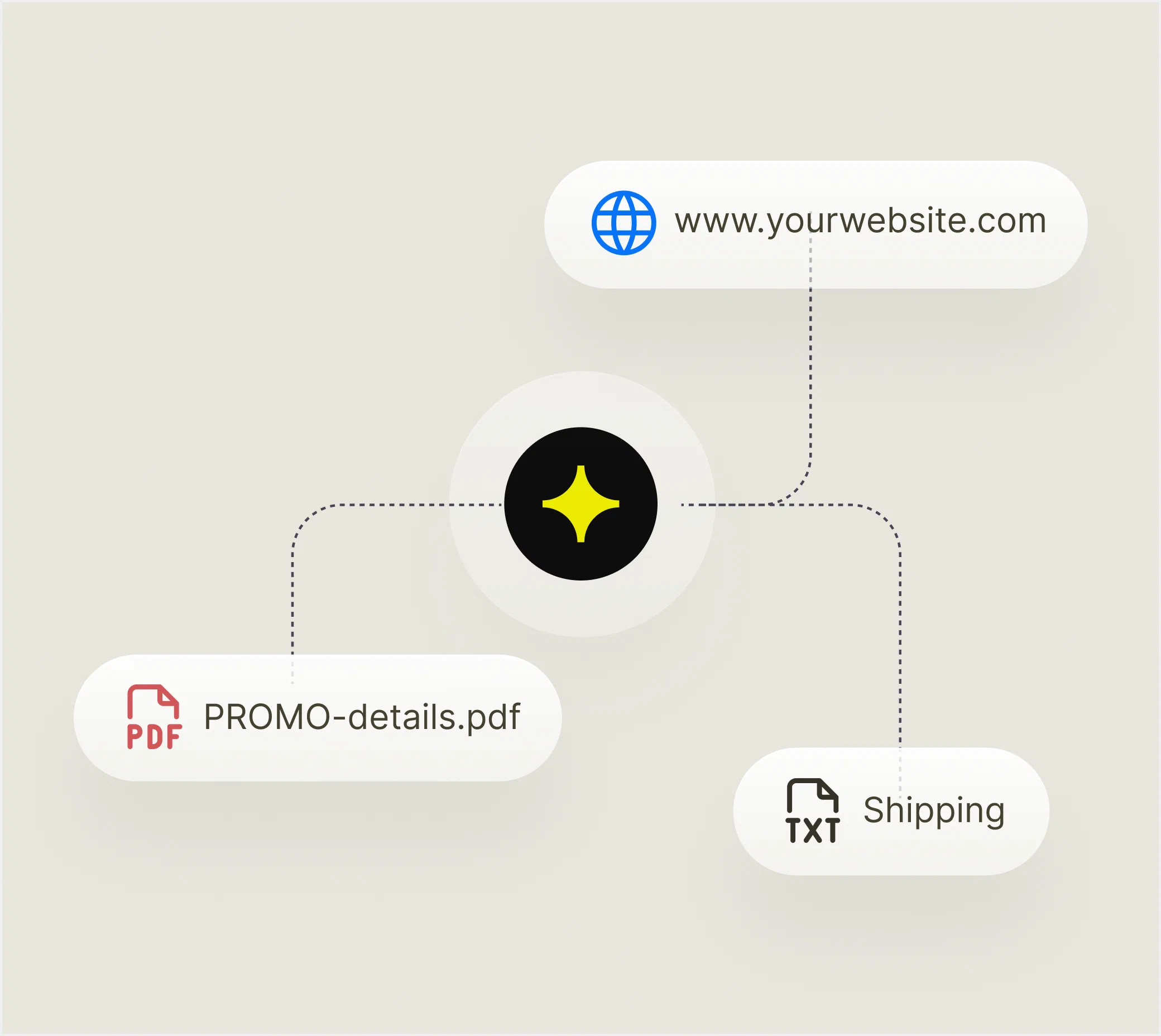
The AI Agent provides context aware responses and AI answers from a maintained knowledge base. It resolves 74% of conversations on average while keeping answers grounded in information the business controls.
Route work, set priorities, and streamline repetitive tasks while keeping the workflow under control. Support teams save time without losing ownership or review.

Keep human agents responsible for sensitive decisions and preserve the full context during every handoff. Customers continue without explaining the issue again.
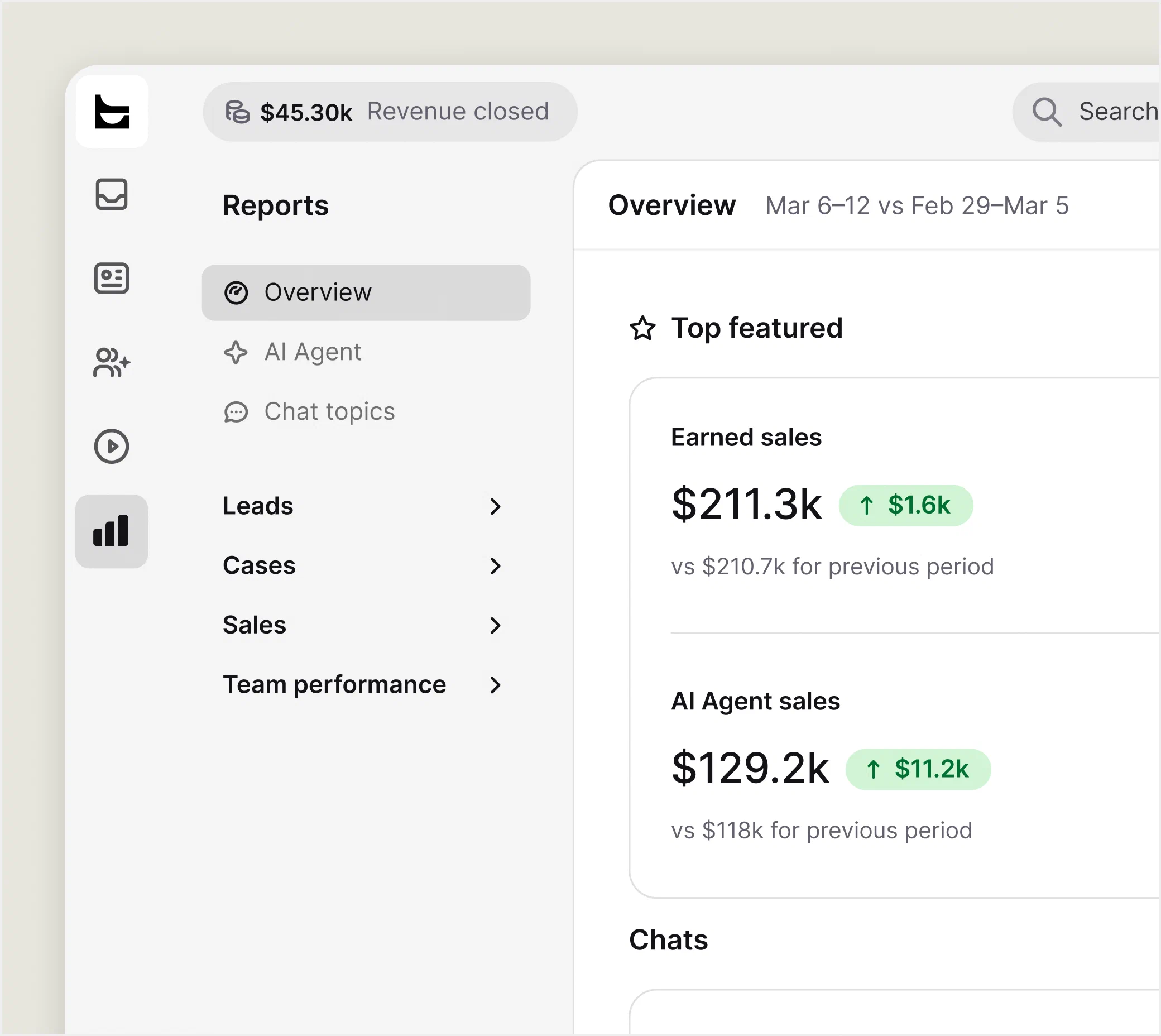
Monitor conversations, take over when needed, and keep automation focused on repeatable work with outcomes your team can measure.
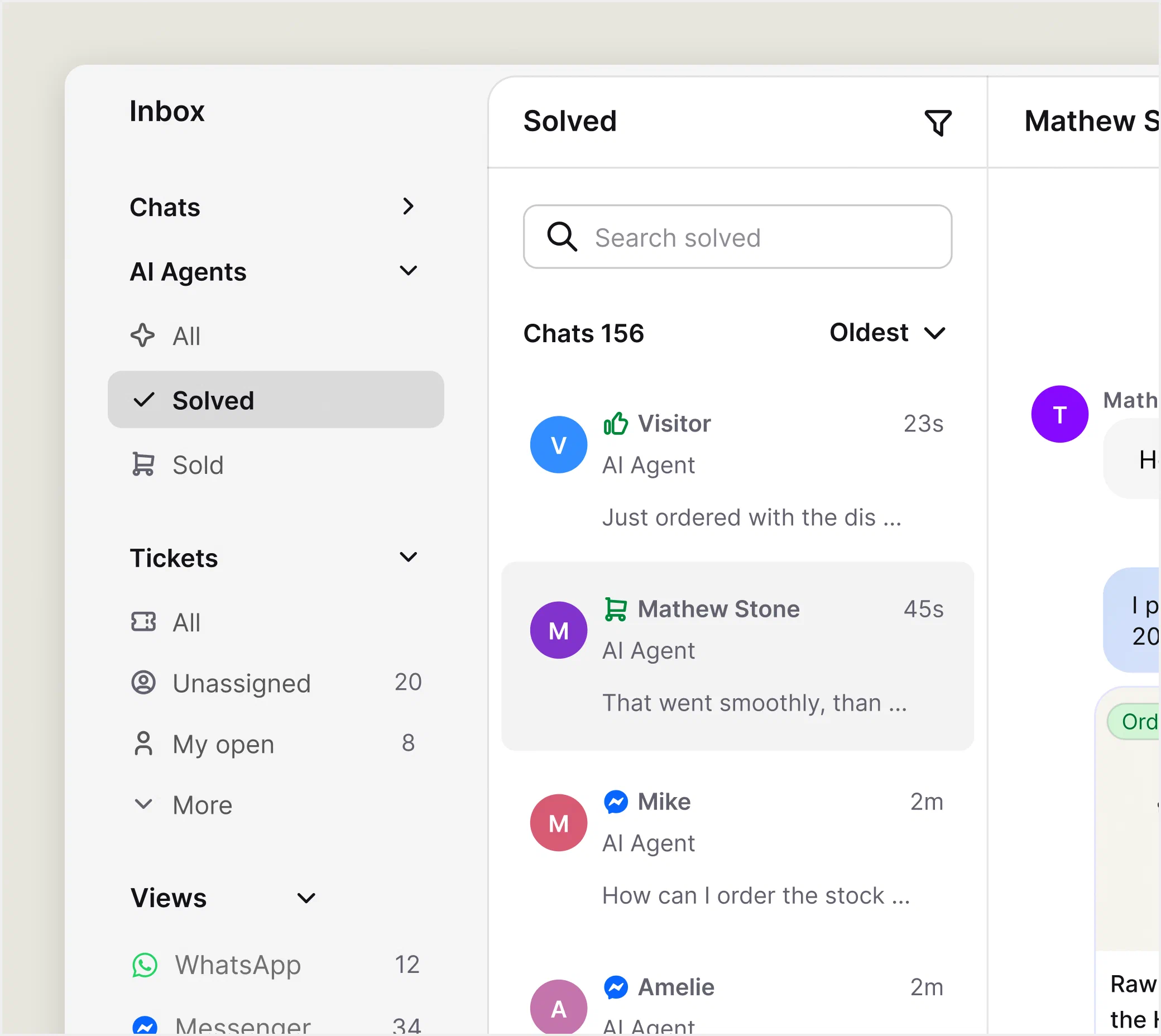
Connect live conversations, support tickets, and self service so unresolved work keeps a clear owner and next action. Immediate chats stay fast while longer support requests remain visible after the customer leaves.
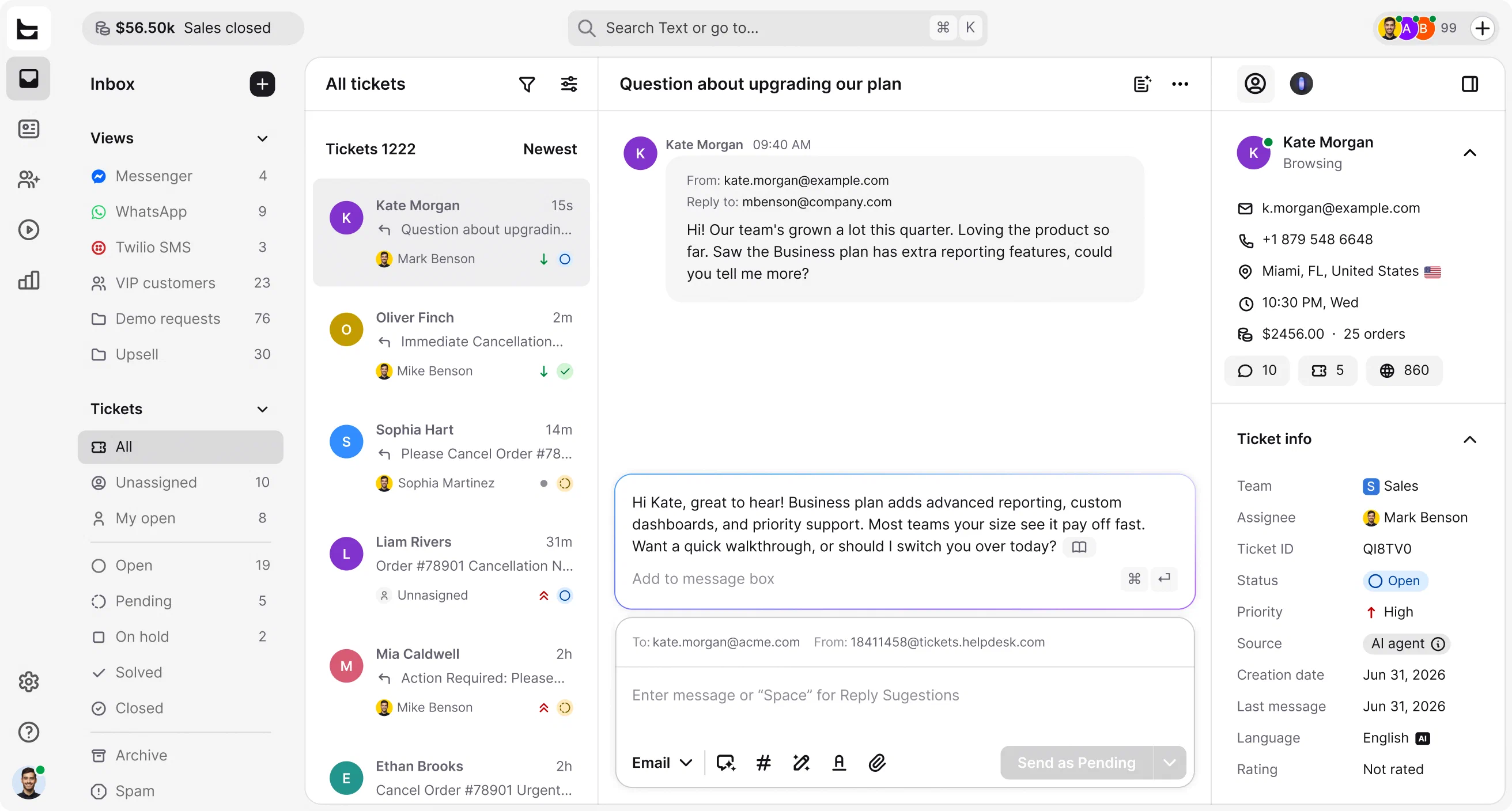
Use team inboxes, routing, and collision detection to keep longer cases visible and prevent duplicate work. Managers can see where every request is waiting or has stalled.
Use one searchable knowledge base for customers, agents, and automation, with an easy path to a person when self service is not enough. Review unanswered searches to keep guidance useful and current.
Connect LiveChat to popular ecommerce platforms and bring customer data into every conversation. Give agents the store context they need to discuss products, checkout, delivery, and returns, while integrations with CRM, analytics, marketing, and other support tools reduce manual work.
Share product links, connect essential tools, and record outcomes without making the workflow difficult to maintain. The goal is a useful flow of information, not a collection of disconnected integrations.
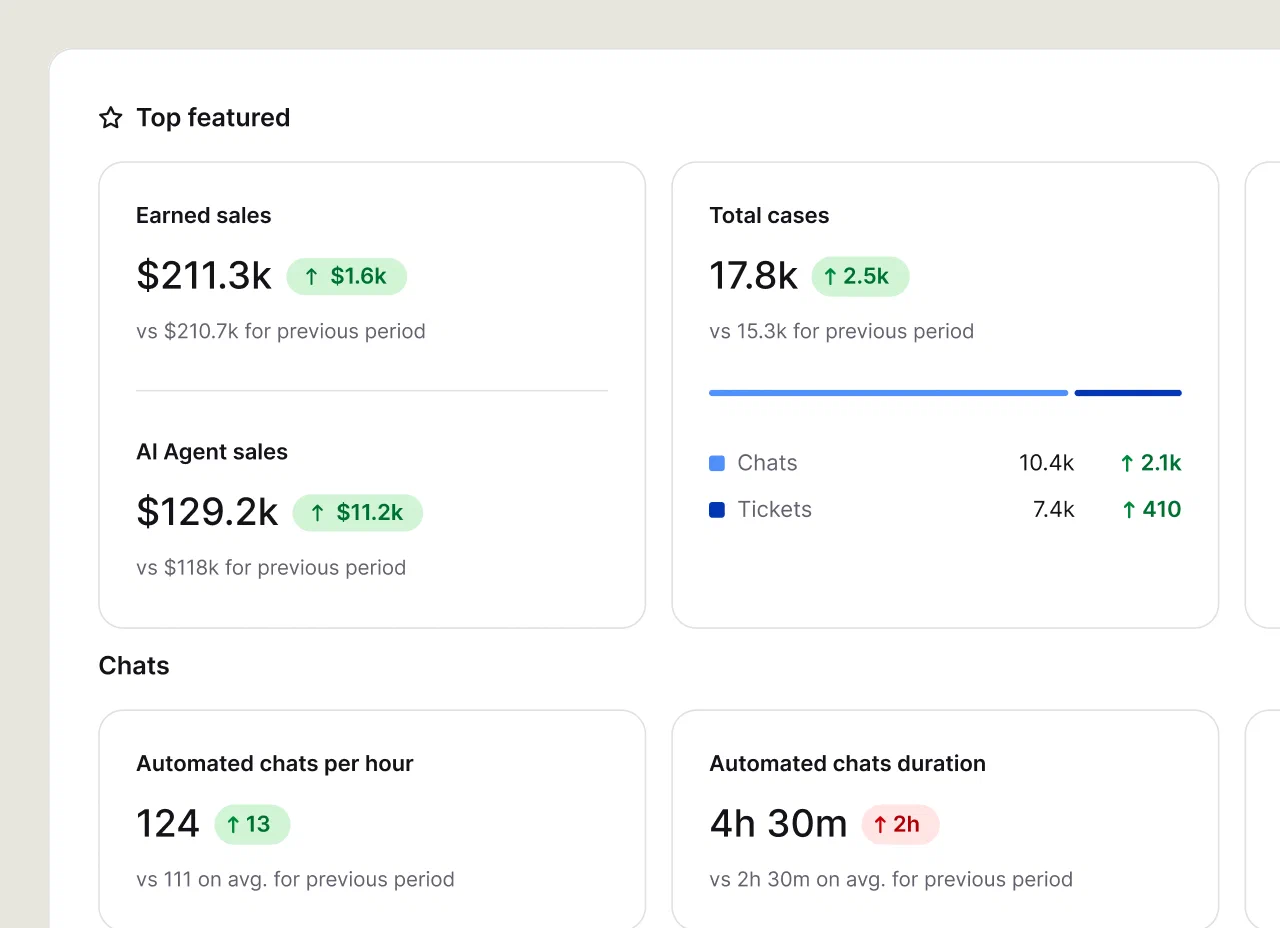
Use reporting to improve staffing, routing, store guidance, and automation. Regular reviews reveal recurring friction before it affects more shoppers.
Choose software that fits today's workflow and can grow with your channels, order volume, and team. Run everyday scenarios to reveal unnecessary steps.
Start with the essentials, then add AI, integrations, reporting, and workflow control when the team is ready. Favor an interface people can adopt without a long rollout.
Compare platforms by completing real support scenarios, not by counting features. Verify plan limits and current pricing directly with each provider.
Test how quickly agents can find information, assign work, create rules, and complete a handoff. A useful trial should expose missing context or unclear ownership.
Before purchase, answer incoming customer inquiries while purchase intent is active. Agents can clarify sizing, shipping, and product differences, then use browsing activity and order details to provide personalized support throughout the customer journey. Personalizing support increases customer trust and satisfaction rates, while helping sales teams recommend relevant products without relying on a generic sales script.
After checkout, keep returns, exchanges, delivery questions, and product guidance easy to reach. Proactive communication prevents avoidable contacts, while frictionless returns enhance long-term brand loyalty. Keep a visible route to a person for exceptions and urgent changes.
Prioritize the communication channels your customers already use, such as website chat, messaging apps, social media platforms, email, or phone support. Multi channel support works best when customer data, customer history, and customer messages remain available in a unified customer view as shoppers move between channels.
A ticketing system and ticket management process preserve the owner, status, priority, and history of unresolved support requests. Multiple team inboxes, collision detection, and routing keep growing ticket volume under control. Self service and knowledge management resolve simple questions, with easy escalation when a rich knowledge base is not enough.
Use customer service performance tools to track conversation volume, first response time, average response time, resolution time, customer satisfaction scores, and agent activity. Review those measures alongside customer interactions, purchases, retained customers, and revenue so operational improvements stay connected to business outcomes.
Exceptional customer service gives shoppers a fast, accurate answer without losing the human touch. For ecommerce businesses, that means using customer context to personalize guidance, communicating proactively before problems appear, and keeping post-purchase support easy to reach. Support teams should deliver a consistent customer service experience across channels while preserving a clear path to a person.
A ticketing system turns a request into a trackable case with an owner, status, priority, and history. It helps teams coordinate work that cannot be completed during the first conversation and gives managers visibility into unresolved demand.
LiveChat brings customer support, AI, tickets, self service, and commerce connections together. Teams can answer pre-purchase questions, preserve customer context, organize follow-up, and support shoppers from product discovery through post-purchase care without losing the personal attention that builds loyalty.
An AI Agent for customer service can answer routine customer queries with context aware responses and AI answers grounded in an approved knowledge base. Automation rules route repetitive tasks, while agent assistance helps people respond faster. Human agents should remain available for sensitive decisions, exceptions, and conversations where empathy or commercial judgment matters.
Start with ecommerce integrations for the platforms and systems agents use every day. Connect customer data with analytics, CRM, marketing, and other support tools when the integration removes manual effort or creates a useful next action. APIs can extend the workflow without forcing the team to maintain disconnected processes.
The best customer service software fits everyday workflows and remains useful as channels, volume, and team size grow. Compare key features, data security, implementation effort, and whether the user friendly interface avoids a steep learning curve. Verify the provider's current pricing, free plan, or custom pricing model directly.
Teams may compare customer support software such as Salesforce Service Cloud, Service Hub Starter, or another Service Hub product. Test basic features and advanced features through realistic work before choosing several disconnected pieces of desk software or support software.
A helpdesk receives, organizes, and resolves customer issues. It combines people, processes, and software so requests have clear ownership, history, follow-up, and reporting instead of disappearing across separate inboxes.
Give shoppers faster answers and build loyalty with connected ecommerce customer service.
Free 14-day trial No credit card required