11 Reasons Why Customers Don’t Trust Your Online Business [And What You Can Do To Fix It]


![11 Reasons Why Customers Don’t Trust Your Online Business [And What You Can Do To Fix It]](https://res.cloudinary.com/dn1j6dpd7/image/fetch/f_auto,q_auto,w_1300,h_500,c_fill/https://success-cms.labs.livechatinc.com/app/uploads/2020/03/bg_blog6_1-8.png)
Customer trust is the foundation of every successful online business. According to the 2024 Edelman Trust Barometer, 81% of customers won't buy from brands they don't trust. Whether you're an established business or a startup, walking an extra mile to assure customers they can trust you is worth all the hard work.
Here's the uncomfortable truth: a massive trust gap exists between how businesses perceive themselves and how customers actually feel. The same Edelman research shows that 90% of executives believe customers highly trust their brand, but only 30% of consumers actually agree. If you're struggling to convert your customers, a trust issue between them and your business might be the cause.
The following are 11 reasons why customers might not be willing to take a plunge on your website and exactly what you can do to fix each one.
Key takeaways
- Accessibility builds confidence: When customers can't easily reach you, they assume you don't want to help them. Multiple contact channels, including live chat, signal you're trustworthy.
- Trust directly impacts revenue: 81% of customers won't purchase from brands they don't trust (Edelman Trust Barometer, 2024).
- First impressions are lasting: Visitors evaluate your website in just a few seconds, and that impression can stick for months.
- Security signals matter: Shoppers look for visible trust badges and security indicators before completing purchases.
- Reviews require authenticity: Consumer trust in online reviews has declined due to fake review concerns. Verified reviews are essential.
1. You leave poor first impression
First impressions matter and can last for months. Consider your website as the face of your company. If it's constructed in a complicated manner, has too many distractions, and pages take forever to load, you might be pushing your visitors away.

Customers evaluate websites in a matter of seconds, which means your website has little time to achieve significant results.
What can you do?
- Improve website design and functionality
Take your time working on your website's design. Carefully choose color schemes, images, fonts, and logical flow of the information presented. Most importantly, make sure website functionality is intact. You want your visitors to navigate your site easily and obtain the information they're looking for.
- Optimize your page loading speed
Users won't return to websites that take too long to load. Every second counts as it can either make a visitor stick around for longer or push them away. Current best practices recommend your website loads in under one second for optimal user experience. Anything over two to three seconds significantly increases bounce rates.
- Check for broken links and dead ends
If you regularly publish articles, send newsletters, or update your social media accounts with bad or broken links, you might be putting your customer trust to the test. Visitors might overlook your mistake the first time, but sooner or later customers will start losing trust in you and will stop clicking on your links altogether.
To identify and fix existing link errors, occasionally scan your website using tools that crawl your pages to find broken links. Use Google Analytics to determine how many visitors ended up on 404 error pages and fix those redirect issues promptly.
2. You are not offering secure payment connection
Even though more people choose to shop online, the question of online payment security is never off the table. You can offer high-quality products or services, but if you cannot provide a secure payment option, you're likely to face difficulties converting visitors into customers. According to the Baymard Institute's 2024 checkout usability research, visible trust signals significantly influence purchase completion rates.
What can you do?
Walk an extra mile to offer a trusted online payment method that your customers widely recognize. If you're selling internationally, offer different payment methods that are well-known worldwide. The most popular options include credit and debit cards (American Express, MasterCard, Visa), PayPal, Apple Pay, and Google Pay. If you're selling locally, make sure you also accept payment methods considered safe in your area.
Another critical factor: window shoppers take a close look at SSL certificates and third-party logos as indicators of whether a store deserves to be trusted. Display safety badges on your checkout page to let customers know their credit card information is safe.
Which trust badges matter most? Consumer research consistently shows:
- McAfee and BBB badges also contribute to credibility
- Norton SSL badge provides users with a high sense of trust
- PayPal verification ranks highly for trust perception
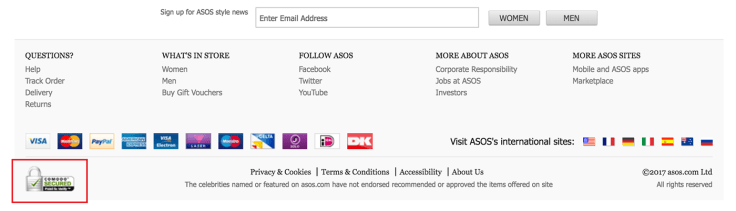
Websites that display these badges can expect higher conversion rates. Position these badges strategically: near the add-to-cart button, on the checkout page, and in the footer where customers naturally look for credibility signals.
Secure payment can also help increase average order value as customers are willing to spend more shopping on websites they know they can trust.
3. People are not speaking about your product or service
Window shoppers are very unlikely to purchase a product or service they don't know about without looking it up online first. And if reviews or testimonials are nowhere to be found, a customer can't make a confident decision to take the plunge.
Here's what's changed: consumer trust in online reviews has declined significantly in recent years. Widespread fake review concerns have made shoppers increasingly skeptical. This means having reviews isn't enough anymore. They need to appear authentic and verified.
What can you do?
Encourage your customers to leave product or service reviews on your website, but focus on verification and authenticity:
- Use verified purchase badges to indicate reviews come from actual buyers
- Allow photos and videos in reviews. User-generated content is harder to fake and more trusted
- Include reviewer details like location or purchase date when possible
- Don't delete negative reviews. A mix of ratings actually appears more authentic than all 5-star reviews
You can encourage reviews by conveying customer satisfaction surveys, giving customers an easy option to leave feedback, or sending reminders via email or browser push notifications after purchase.
Encourage users to share their experiences with your brand on social media using specific hashtags or by tagging you in their posts. Not only will you be able to respond to their feedback, but you'll also get more social recognition. Third-party social proof is increasingly trusted over on-site reviews.
4. You are too mysterious
Chances are that your visitors are curious not only about features of your product or service but also about terms and conditions, shipping rates, or security of their personal information. If this type of information is nowhere to be found on your website, you might be prolonging the conversion time or losing an opportunity to sell at all.
What can you do?
Don't leave your visitors hanging. Fully disclose all the information they might need in order to help them convert faster.

A well-organized website footer can help visitors understand what to expect from your company, regardless of what page they visit. Depending on what business you're in, consider disclosing the following information on your website:
- shipping prices and methods
- return policies
- privacy policies
- terms and conditions
- supplier information
- affiliate programs
- help center or FAQ
5. It’s difficult to get hold of you
Nothing frustrates customers more than not being able to contact a business when they have a question to ask or a point to make. And when you think about it, it's rather odd when businesses keep their contact information secret, as if they don't want to hear from you or aren't willing to help.
What can you do?
To avoid appearing unfriendly, make sure visitors can easily find your contact information online. And don't forget that different customers prefer communicating with businesses through different channels. That's why there should be several available ways to get in touch with you.
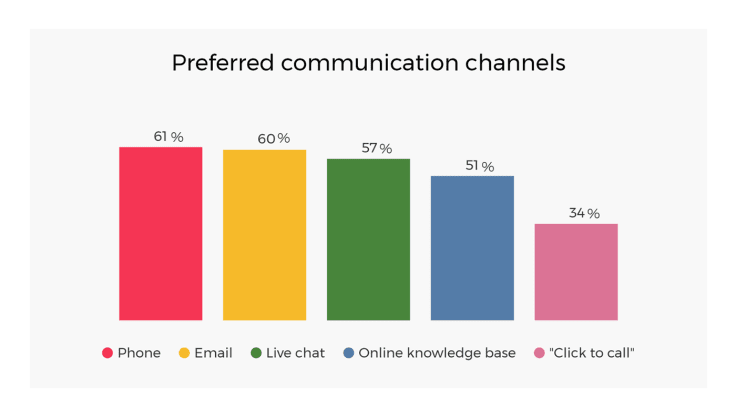
Make sure your customers can give you a call or send an email. Consider implementing live chat on your website to provide live support, too, or have a contact form on your website. Certain businesses are expected to have an office address as well.
6. You are not active on social media
Having inactive social media accounts can send a wrong message about your business. Customers who look upon them can perceive your absence in two ways: either you're no longer in business, or you're indifferent to your online reputation and the opportunity to connect with customers.
Here's what many businesses miss: customers actively check social media to verify if a business is "real." Before making a purchase from an unfamiliar brand, shoppers will often look at your recent social media posts to confirm you're legitimate and actively operating. An abandoned Instagram account or a Twitter profile that hasn't posted in months raises immediate red flags.
Not posting consistently should be only part of your worries. What you're really missing out on by being inactive on your social media accounts is having the ability to react and respond to customers' comments and messages in real time. And that can cost you not only customer trust but loyalty too.
What can you do?
If you realize that you can't properly manage all of your social media accounts, focus your attention on a selected few instead. By now you probably know which channels receive the most attention from your audience, so stick to them. It would also help to get rid of inactive accounts to avoid leaving a wrong impression to users who stumble upon your long-forgotten feed.
Don't forget your Google Business Profile. For local businesses especially, an up-to-date Google Business Profile is often the first thing potential customers see. Keep your hours, contact information, and photos current. Respond to Google reviews, both positive and negative, to show you're engaged and care about customer feedback.
Consistently updating your social media accounts and responding to comments and questions left by your followers takes a lot of time. If you want to keep all of your social media accounts up and running no matter what, you will probably have to hire someone who can take care of them for you. Having a professional managing your social media matters can take a huge weight off your shoulders and lead your company towards achieving positive social media presence that drives sales.
7. Your marketing campaigns are not personalized
The battle to win customers' attention has never been as competitive as it is today. More businesses are personalizing their marketing efforts to cut through the digital noise and build lasting relationships with their customers.
If you're still delivering generic emails or web push notifications to your customers and your competitor is personalizing those, you might be at a significant disadvantage. As your irrelevant messages get ignored, a competitor builds a relationship with window shoppers and slowly gains customer trust and loyalty.
What can you do?
If you want to create and deliver messages that are truly relevant to each customer, you need to learn more about them. Collect and utilize information about your customers. This might sound complicated, but it's actually not that hard.
Start with the basics:
- customer profile (name, age, location, birth date)
- previous purchases (finished purchases and/or abandoned carts)
- on-site behavior (visited pages, clicks, last log in)
Once you've gathered this information, use it to segment your customers. Doing this will allow you to include or exclude a certain group of customers from your marketing campaigns, which means that your content will only reach those recipients who can truly benefit from it. Collecting information about your customers also comes in handy when creating automated messages, such as birthday discount emails or reminders about unfinished purchases.
Personalized marketing works in your favor by helping you create lasting relationships with your customers that are based on trust. Just don't forget that there's always a thin line between "We thought this might be interesting for you" and "We are watching you.".
8. You make promises you can’t keep
Every promise you make and break hurts your reputation. According to the PwC Consumer Intelligence Series on Trust, 71% of consumers say they will not buy from a company they perceive as having lost their trust. From made-up statistics on your website to promising prompt answers to inquiries you can't deliver, broken promises have lasting consequences.
The same applies to misleading product or service descriptions. Window shoppers might fall for it the first time, but soon after learning the truth about your product or service, regaining customer trust becomes an uphill battle.
Common broken promises that destroy trust:
- Shipping times: Promising "2-day delivery" then taking a week without communication
- Product quality: Images and descriptions that don't match the actual product
- Customer support: Claiming "24/7 support" but taking days to respond
- Price guarantees: Advertising "lowest prices" when competitors regularly beat you
- Stock availability: Showing items as "in stock" that are actually backordered
What can you do?
Be honest from the start. Under-promise and over-deliver rather than the reverse. If a promise is broken, apologize sincerely and make it up to them. A discount, expedited shipping, or a personal follow-up call can help recover the relationship.
Show that you're making an effort, or better yet, don't put yourself in compromising positions unnecessarily. Audit your website for any claims that you can't consistently deliver on. Being as open as possible is the only way to build a lasting relationship.
9. Your website isn’t mobile friendly
It doesn’t come as a surprise that there are more and more visitors aMobile traffic accounts for over half of all web traffic globally, and Google has fully implemented mobile-first indexing. This means Google primarily uses the mobile version of your site for ranking and indexing. A poor mobile experience doesn't just frustrate users; it signals to both search engines and customers that you don't care about the majority of your traffic.
Research consistently shows that a reliable website or app increases consumer trust in an online business. When your mobile site is clunky, slow, or difficult to navigate, you're actively undermining customer confidence.
What can you do?
Even if you're not seeing massive mobile traffic today, the trend only moves in one direction. If you want mobile users to convert, you need to earn their trust first. Start by offering a pleasant mobile browsing experience.
You can achieve this by:
- Building a responsive website that automatically adapts to any screen size
- Optimizing for mobile page speed. Mobile users are even less patient than desktop users
- Ensuring touch-friendly navigation with appropriately sized buttons and links
- Simplifying mobile checkout with autofill, digital wallets, and minimal form fields
- Testing your mobile experience regularly using Google's Mobile-Friendly Test tool
Remember: if your mobile site provides a poor experience, customers will assume your products and service are equally subpar.
10. You're not protecting customer data
Data privacy has become a defining trust issue. According to the 2024 Cisco Consumer Privacy Survey, only 43% of consumers believe organizations adequately protect their data, and this distrust spans across all industries.
In an era of regular data breaches and growing privacy regulations like GDPR and CCPA, customers are more protective of their personal information than ever. If your privacy practices are unclear or seem inadequate, you'll lose customers before they even consider buying.
What can you do?
- Create a clear, readable privacy policy that explains exactly what data you collect and why. Avoid legal jargon
- Implement visible security measures including SSL certificates, secure payment processing, and encrypted data storage
- Be transparent about data use. If you share data with third parties, say so explicitly
- Offer data control options. Let customers access, modify, or delete their personal information
- Comply with privacy regulations relevant to your customers (GDPR for EU customers, CCPA for California, etc.)
- Communicate promptly if any security incident occurs. Trying to hide breaches destroys trust far more than the breach itself
As AI and personalization become more prevalent, being upfront about how you use customer data for these purposes builds trust rather than eroding it.
11. Your value proposition is not clear or you don’t even have one
Have you ever stumbled upon a business website and couldn't figure out what it's about or how you can benefit from it? If so, you can probably agree it didn't take you long to click back or close and get on with your day.
A website that doesn't have a clear, concise, and most importantly unique value proposition usually fails to spark a visitor's interest and creates a less trustworthy image of the business. An incoming visitor doesn't trust an unfamiliar website that struggles to communicate the main point of the business to them.
What can you do?
To keep the visitors on your site, create a value proposition that clearly explains:
- What you do
- What are the benefits of your product or service
- How you're different from others
Once that is pinned down, prominently display your value proposition on the website and on other mediums through which you communicate with your prospects and customers. If your value proposition is formulated well, it should help you attract quality prospects and make it easier for them to understand why they should trust you with their time and money.
Bonus trust killers to watch for
Beyond the core 11 reasons, several additional factors can silently erode customer trust:
Hidden fees at checkout
Nothing destroys trust faster than surprise charges. When customers see unexpected shipping costs, handling fees, or taxes added at the last moment, they abandon their cart and often never return. Be upfront about all costs from the beginning, or offer free shipping thresholds that you clearly communicate.
Poor return policy
A restrictive or unclear return policy signals that you don't stand behind your products. Customers interpret this as "they know people will want to return this." A generous, clearly explained return policy actually increases purchase confidence and can boost conversions.
Spelling and grammar errors
Professional presentation matters. Typos and grammatical mistakes throughout your website suggest carelessness. Customers wonder: if you can't be bothered to proofread your website, how careful will you be with their order?
Not responding to reviews
Whether reviews are positive or negative, failing to respond sends a message that you don't care about customer feedback. Thank customers for positive reviews and address negative reviews promptly and professionally. How you handle complaints publicly demonstrates your customer service quality to everyone watching.
How to rebuild customer trust after breaking it
Sometimes trust is damaged despite your best efforts. A shipping delay, a product defect, or a customer service mistake can shake customer confidence. The good news: you can rebuild trust, but it takes intentional effort.
Remember this key insight: it takes twice as many positive experiences to rebuild trust as it takes negative ones to break it. Recovery is possible, but it requires consistent, genuine effort over time.
Steps to rebuild trust:
- Acknowledge the problem immediately. Don't wait for customers to complain
- Take full responsibility. Avoid blame-shifting or making excuses
- Communicate what you're doing to fix it. Be specific about actions, not just apologies
- Offer meaningful compensation. Make the customer more than whole when possible
- Follow up personally. Check in after the resolution to ensure satisfaction
- Implement systemic changes. Show that you've prevented the issue from recurring
- Be patient. Trust rebuilds gradually through consistent positive experiences
Tools like LiveChat can help you respond to trust issues in real time, addressing concerns before they escalate and demonstrating your commitment to customer care.
Customer trust audit checklist
Use this quick checklist to audit your website for trust issues:
| Trust factor | Priority |
|---|---|
| Website loads in under 3 seconds | High |
| SSL certificate installed and visible | High |
| Trust badges displayed on checkout | High |
| Contact information easily findable | High |
| Live chat or immediate support available | High |
| Clear privacy policy accessible | High |
| Return policy clearly stated | High |
| Customer reviews visible (with verified badges) | High |
| Mobile-friendly design | High |
| No broken links on key pages | Medium |
| All pricing transparent (no hidden fees) | High |
| Social media accounts active and responsive | Medium |
| Google Business Profile up-to-date | Medium |
| Clear value proposition on homepage | High |
| Professional copy (no typos/errors) | Medium |
Your turn
Customer trust is an essential part of any successful business online. By maintaining the credibility of your company, you have bigger chances to not only increase customer loyalty but also boost sales and accelerate referrals.
Without a doubt, building customer trust in your online business can and will be difficult.
However, simple yet genuine actions go a long way in creating a lasting bond with your customers, and that's exactly what your business should try to attain too.
Make customer trust a priority in your business strategy. The sooner you start taking first steps towards being more honest, transparent, and present with your customers, the sooner you will build sustainable relationships with them.
Frequently asked questions
Why do customers lose trust in businesses?
Customers lose trust when businesses fail to deliver on promises, provide poor customer service, lack transparency about pricing or policies, have security concerns, or don't respond to feedback. According to PwC research, 71% of consumers won't buy from companies they perceive as having lost their trust. The most effective way to prevent trust loss is proactive communication. Tools like LiveChat help you address concerns before they escalate into trust-breaking experiences.
How do you build trust with customers online?
Build trust online through visible security measures (SSL, trust badges), transparent pricing and policies, accessible customer support, authentic reviews, and consistent delivery on promises. Making yourself available through multiple channels, including live chat for immediate assistance, signals that you're ready to help and stand behind your products. LiveChat enables real-time conversations that build confidence during critical decision-making moments.
What makes a website trustworthy?
Trustworthy websites feature professional design, fast loading speeds, visible security indicators, clear contact information, transparent policies, and authentic customer reviews. Customers look for trust badges before completing purchases, and research shows a reliable website increases their confidence. Adding live chat support through LiveChat further demonstrates accessibility and customer commitment.
How long does it take to rebuild customer trust?
Rebuilding trust takes twice as many positive experiences as the negative ones that broke it. There's no fixed timeline. It depends on the severity of the trust violation and consistency of your recovery efforts. Quick acknowledgment, genuine apology, meaningful compensation, and systemic changes all accelerate recovery. Maintaining open communication channels through tools like LiveChat helps demonstrate ongoing commitment to customer satisfaction.
What percentage of customers leave due to trust issues?
According to the 2024 Edelman Trust Barometer, 81% of consumers say trust is a deciding factor in their purchasing decisions. These numbers highlight why proactive trust-building through transparent practices and accessible customer support via LiveChat directly impacts your bottom line.